Lights
Fredosor.com
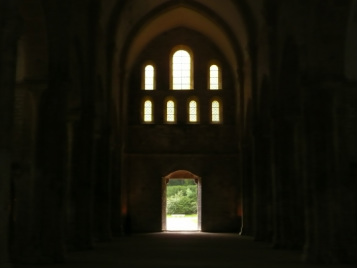
In our darkness
We look for the Lights
Throughout our history, we have of course benefited from the thoughts of the universal masters of thinking. There are in addition three pillars of human perception who deserve great attention: Joseph Campbell (The Masks of God) gives us a cosmological perspective, spanning from the origins of the human species and up to present times - navigating in the space between vast mythological scenarios and intimate individual preoccupations. Marcel Proust (Remembrance of things past) takes us into his personal universe with an outlook on the most microscopic details of human observation and their relations with sensuality, social interaction, and most other facets of human preoccupations. Pierre Bourdieu (Distinction and other works) gives us a clearer understanding of interactions between society and the individual, thus entering the space between the works of Campbell and Proust.
Cervantes (Don Quijote) navigates between Don Quijote's world of lofty ideas (isolated from the worries of grappling with reality) and its contrast with Sancho Panza's down to earth, day to day survival outlook on life. Their travels as companions bring the two outlooks in constant confrontation, thus challenging the weaknesses and strengths of the two respective outlooks. Cervantes has a global following, as you can see from this link.
Carl G. Jung (Man and his symbols) makes the link between mythology and the collective unconscious, and develops notions of archetypes in the collective unconscious. Jung is thus giving us further insights into the world Joseph Campbell opens up for us.
Dante (La Divinna Commedia) travels with Virgil (author of the Aeneid) through the circles of Hell and the Purgatory and is met by his eternal love Beatrice at the gates of Heaven, where she takes over the guiding into Heaven's circles. Through these travels we meet personalities Dante knew in his life, and they are characterized and situated in their rightful place in one of the circles concerned.
Marcel Pagnol is the poet of Provence, transmitting the unique atmosphere one of the world's most attractive regions in terms of quality of life. His portaits of people and the relations between them, go to the core of what human relations are all about.
Francois Rabelais takes us into the colourful life of the French Renaissance in the 16th Century.
Michel de Montaigne's Essays have, for centuries, given us great amounts of common sense wisdom.
Seneca, the Roman philosopher and statesman, has something important to say to us.
Gaston Bachelard was a French philosopher who explored the psychoanalysis of the elements of fire, water, earth, and air. He also gave us interesting thoughts on the notion of time, which we look at here.
Cervantes (Don Quijote) navigates between Don Quijote's world of lofty ideas (isolated from the worries of grappling with reality) and its contrast with Sancho Panza's down to earth, day to day survival outlook on life. Their travels as companions bring the two outlooks in constant confrontation, thus challenging the weaknesses and strengths of the two respective outlooks. Cervantes has a global following, as you can see from this link.
Carl G. Jung (Man and his symbols) makes the link between mythology and the collective unconscious, and develops notions of archetypes in the collective unconscious. Jung is thus giving us further insights into the world Joseph Campbell opens up for us.
Dante (La Divinna Commedia) travels with Virgil (author of the Aeneid) through the circles of Hell and the Purgatory and is met by his eternal love Beatrice at the gates of Heaven, where she takes over the guiding into Heaven's circles. Through these travels we meet personalities Dante knew in his life, and they are characterized and situated in their rightful place in one of the circles concerned.
Marcel Pagnol is the poet of Provence, transmitting the unique atmosphere one of the world's most attractive regions in terms of quality of life. His portaits of people and the relations between them, go to the core of what human relations are all about.
Francois Rabelais takes us into the colourful life of the French Renaissance in the 16th Century.
Michel de Montaigne's Essays have, for centuries, given us great amounts of common sense wisdom.
Seneca, the Roman philosopher and statesman, has something important to say to us.
Gaston Bachelard was a French philosopher who explored the psychoanalysis of the elements of fire, water, earth, and air. He also gave us interesting thoughts on the notion of time, which we look at here.